In one of my public sector jobs, I was involved in preparing important organisational reports. They were required by statute, had to be submitted to Parliament and needed to be approved by the Leadership Team and the Board. But at my organisation, both of those groups were under huge pressure and scrutiny, and getting them to engage so that my colleagues and I could finalise the documents was hard.
This is one of the many situations in public sector work that cause tangible work pressure and stress. I’m sure you’ll have lots of examples from your own current and past jobs.
There are less tangible, less obvious public sectors stressors too and I wrote a blog post about five ‘hidden stressors’ for women working in the public sector [link] a few weeks back.
But whether tangible or not, what do you do with all this stress? That’s the topic of this post. When the pressure’s on, you’re still coping, but only just, and you’re drinking way too much Coca-Cola to keep yourself going.
What’s at stake?
My sense is that this situation is all too normal for women working in the public sector, in New Zealand, at least. Not just reaching regularly for sugary drinks when your energy and concentration fades, but leaving late, processing emails while watching evening TV, and coming in early. It’s not even mentioned much anymore, even though the 2025 Public Service Census found 44% of respondents had experienced stress often or always in the previous 12 months.
What’s at stake is our ability to move out of that wired-for-action mode and into a lower level of sympathetic nervous system arousal in which we can rest and recover. And resting and recovering from mental and physical exertion is important – it lets the parasympathetic nervous system take over for a bit, and the cells of our brain and body be renewed. Without rest and recovery from stress, inflammation increases, we age prematurely, and we put ourselves on the track for all kinds of disease.
Additionally, if we’re under constant stress at work, we’ll be stuck in survival mode, and it’ll be hard to keep the ‘big picture’ in mind. If you’re like many women in the public sector, you’ll be keen to progress your career, by learning new things, stretching your capability, but it’s hard to take steps towards those goals when you’re just focused on making it through each week.
Downgrade your stress response by getting back to nature
I wrote a blog post a few weeks back about how going for a walk in nature is one of the very best ways to reduce your work stress. It was based on Dr Marc G. Berman’s research at the University of Chicago that found that if you walked for 50 minutes in a natural environment like a park or woodland, you got a 20% boost in cognitive processing.
I’ve since been reading Dr Elissa Epel’s book The Stress Prescription, and Dr Epel, a health psychologist from the University of California (San Francisco), writes that part of the reason we’re holding on to so much stress is that we’re in “nature deficit”.
Our minds and bodies have become attuned to the myriad stimuli of our work lives, our phones, laptops and so on, so true of increasingly digitalised public sector workplaces in New Zealand. We’re also constantly on alert due to the many aural and visual stimuli that come from living in urban environments, she says. Conversely, we might only visit natural environments occasionally, on holiday, if at all.
That constant heightened stimulation from our work in city environments means our brains learn to not just notice but expect stimuli and that keeps us “on” and in a state of constant alertness and non-acute stress – what Epel calls “yellow mind”. Yellow mind is not as bad as the “red mind” of acute stress, but not nearly as good as the “green mind” of being switched off, of resting and relaxing.
Spending time in natural environments like the bush, forests or beach helps our brain and our body downgrade their level of alertness and vigilance, and get back to a slower, calmer, more creative mental state.
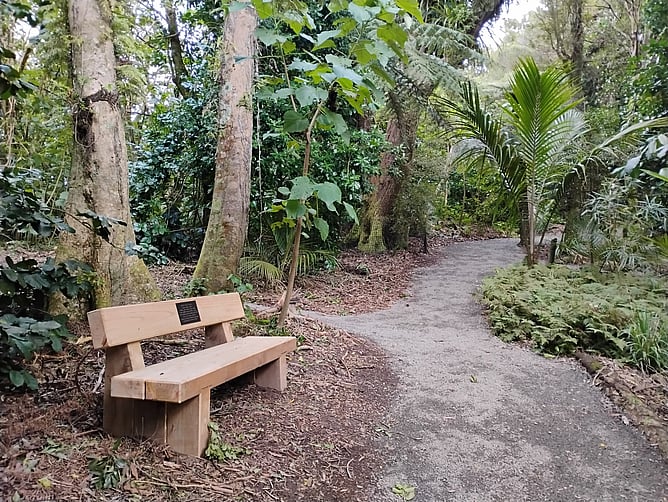
Walking in a bush or forest allows you to benefit from the range of greens in the foliage, the smells of the wood and the soil beneath your feet, the sounds of birds and wind rustling through tree leaves. All inviting a feeling of calm and safety. Even seeing pictures or video of green spaces has a positive effect.
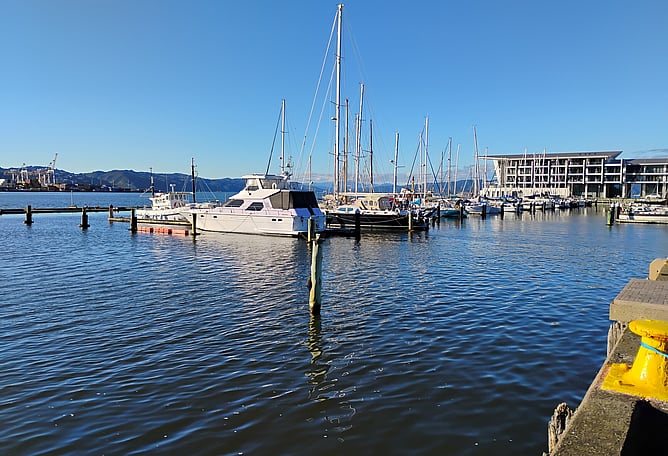
Spending time near rivers, waterfalls, or the ocean also help us shift to a more restful state, and may even move us into “blue mind”, the deep rest state, Dr Epel refers to. It’s not just the greys and blues we can see, or the rhythmic sound of waves lapping on a beach, the vastness of the ocean and our comparative smallness, helps put our human lives (and work stress) into perspective.
Be the lion, not the gazelle – change your perception of stress
A second method for sorting out the stress that comes your way as you go about your days and weeks working in the public sector is a psychological tool, and helpfully, you don’t need to find a forest or get to the ocean to do it. It’s to change the way you think about stress – at work or anywhere else. Dr Epel calls it being the lion.
You’ll probably know by now that the stress response is our body going into fight-or-flight mode so that we can respond quickly and efficiently to some kind of threat – as if we were a gazelle, scared for its life, needing to escape a hungry lion excited about an upcoming meal. The trouble is, in 2026, we still perceive threats that we need to respond to as if they were lions, and it’s making us mount a stress response appropriate to that type of threat.
So, one way to deal with stress, is to try to perceive threats differently. Instead of thinking of that tricky project as something life-threatening, could you frame it as an interesting or even exciting challenge?
Why this works is because the human brain is a predictive one – it ‘sees’ what it expects to see. So if we believe that a project we’re working on is an unpleasant, uphill battle, then it will seem and feel like one. But if we perceive it as a temporarily sub-optimal state of affairs that can be made more pleasant and smooth-running with some effort, we will feel (and be) less stressed, and will be able to cool-headedly take action to make it so.
I’m going to be honest. A manager years ago proposed this idea to me and I haven’t always been able to make it work. It seems to me that you need to catch your thoughts about a situation very quickly in order to reframe them, and which I rarely manage. Even Dr Epel admits it’s difficult to make the mental transition right when you’re in the thick of things.
But in my experience one thing that works, if you’ve already labelled a situation as a ‘nightmare’ and have progressed to officially ‘stressed’, is to do a quick survey the resources you can draw on as you move forward. I find that reminding myself there are often written guidelines, people I can call on for technical help or encouragement, and both the internet and AI to search, helps counter the idea that I’m on my own and have to figure out ‘from scratch’ how to tackle things.
Train for stress by putting yourself under stress on purpose
The last tool for dealing with your work stress that I’m going to talk about in this post is more forward-looking. It’s about practising for stress by deliberately exposing yourself to acute but manageable stress for brief periods of time. I like this idea because it makes a little proactive project out of preventing or at least downsizing future stress responses.
Dr Epel says experiencing this type of acute but manageable stress for short periods of time not only helps us to face future stressors more ably, but is also good for us. It invigorates the body’s parasympathetic nervous system response to counter the stress response mounted by your sympathetic nervous system, and kickstarts a cell-renewal process that leaves cells healthier and stronger.
It's called ‘hormetic’, or ‘positive’ stress, and it helps you counter and prevent chronic, toxic stress – the kind that is easy to slip into in public sector work. So, how can you get this ‘hormetic stress’ and the cell regeneration and general invigoration that follows? Here are two ideas.
As Emily and Amelia Nagoski mention in their book Burnout, exercise is the best, most efficient way to both recover from stress, but also to protect your body against the negative effects of toxic stress. And Dr Epel suggests one type of exercise in particular – HIIT, or high-intensity interval training.
HIIT is where you exercise vigorously for 30 seconds or so, with your heart rate up around the 80% capacity mark, followed by a short rest of ten seconds, repeating this several times over several minutes. It’s heart-pounding exercise, and you’ll get puffed even if you’re very fit. But it fits easily in the schedules of even the busiest 30- and 40-something women, and the stress-fighting and other health benefits make it worth it.
Dr Epel’s second option for practising handling stress is less tiring, takes even less time, but is quite a bit colder. It’s to immerse yourself in cold water, for very brief periods of time – cold shower water, to be precise!
She suggests turning the water down as cold as you can stand it at the end of your daily warm shower, and seeing how long you can last – 15 seconds? 30 seconds? A minute? She warns it will be a shock, but it is exactly the shock, accepting it, and relaxing into it, that prepares us for times of acute stress in other parts of our lives.
Make a plan try one stress tool
So, the next time you’re at work, or you’re thinking about work on the weekend, and realise you’re under stress, make a plan to try out one of the above stress reduction tools. Most of us are time-poor these days, but none of the three ideas takes more than a few minutes. And if you shower in the morning, you could have done something to reduce your stress before you’re even out the door!
__________________________
Hi, I'm Marie-Louise. I help women in their 30s and 40s in the public sector progress their career without changing their job — starting with getting on top of the day-to-day overwhelm that gets in the way.
I write this weekly-ish blog to share helpful, action-oriented ideas from the research I read, applied to public sector work. I've recently launched a 1:1 online coaching offering focused on tackling work overwhelm, and I'm developing a session to help women diagnose whether there's scope to reshape their current role for real career growth. Personalised coaching is available too.
Get in touch, I'd love to hear from you. I'm at marie-louise@fireflycoaching.nz or www.linkedin.com/in/marie-louise-siddle on LinkedIn.