When I had coaching several years ago, to deal – I hoped – with a lack of confidence in a new, more senior work role, I didn’t really know what to expect. I enjoyed the sessions, but by the end of the third one, I had the awful realisation that I was wasting the coach’s time. I was so busy that my attention wasn’t always fully focused on my coach and our conversation, and between sessions, I didn’t reflect on what we’d discussed enough to ensure each session built on the previous one to get maximum growth.
If I’d known more beforehand what it would be like and what would be needed from me to make it a success, I might have scheduled my sessions for another month.
So, here's a post that will paint a picture for you of what workplace coaching’s like, what you can expect from me, and my suggestions for how to get the most out of your sessions so you’re successful in meeting your goals.
I’ve focused the post on fully personalised coaching, in which a client might come for more than one session. Myself and other coaches, though, also provide ‘topic-focused coaching’ which is one or more sessions that focus on a pre-determined topic or goal.
An overview of coaching - what to expect in your first couple of sessions
Coaching begins with getting to know each other, enough to provide a sense of trust between coach and client, and a dive into why you as client have come to coaching. This provides the broad context for the conversations that follow.
The first coaching session will also include a discussion about goals. Your coach will want to do their best to help you get the growth or achieve the success you’re after, so it’s important that they know what your goal is. It could be an ‘affective’ goal (to do with your feelings about a work or career issue, or gaining confidence, or motivation), a ‘cognitive’ goal (helping you think differently about something, or understand something more clearly), or a skills-related goal (helping you learn a new skill you need for a particular situation).
From the second session onward, your conversations with your coach will delve into more detail about the issue you’re struggling with, and your thoughts and feelings about it. You’ll also work together to brainstorm possible solutions and evaluate them, and your coach may encourage you to ‘run some experiments’ to test these out, so you can identify which ones feel right.
Not to be left out, an important part of the coaching process is reviewing your conversation and the progress you’ve made. Therefore, each session will end with a ‘So, what have we covered today?’ type reflection.
Check the personality, style and approach of your coach is a fit for you
Coaching works best when you have a good fit of personality and style with your coach, and when their coaching approach matches your expectations. Every coach is slightly different.
I myself tend to move between asking questions that let you find your own answers, and offering gentle suggestions – and the occasional gentle challenge – depending on what I think will serve you best. But what stays consistent is the session structure, so you’ll always know ‘where you are’ in the conversation and what’s coming, even if it goes in some unexpected directions sometimes (like all conversations do).
I aim for warm and encouraging – you’re not going to have your performance at work picked apart or be told what you’re doing wrong. Validating how people feel is really important to me, so I’ll be doing that for you, and I like to bring in a laugh every now and then to lighten things up!
This is a good moment to mention too, that there are different types of coaching, each focusing on a different type of need. For example, executive, leadership, or career coaching to help someone decide on a completely different career path. My focus is different again: women in their 30s or 40s who’ve been working in the public sector a while, who are not yet at the leadership or executive level, but who want to grow and progress in the public sector career they’re already in.
If after the first session the fit with your coach doesn’t feel right and you prefer not to have further sessions, there’ll be no hard feelings.
Before you come to your first coaching session
There are a few things to do, before you have your first coaching session, that will set things up for successful conversations and the achievement of that goal we talked about earlier.
Think about how to clearly articulate what's happening for you at work, so all the messy nuances of it are captured. You want your coach to have the full picture and you don't want to regret having missed out this or that detail. And, say your issue is a more general one, a lack of confidence, for example, identify 2-3 examples of what that looks like.
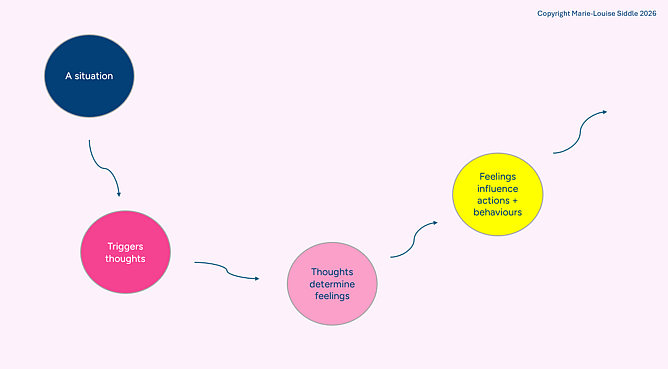
Get ready to express your thoughts and feelings in relation to the issue you're finding difficult at work. This will help your coach to see whether there is any room to reframe the situation and therefore change your feelings about it.
Think about the solutions to your tricky work situation you've tried so far, and any reasons you’ve thought of for why they haven’t worked. This paves the way for useful conversations about other possible solutions.
Protect the space to really engage
This is so important. Your time, focus, energy (and money) are precious, so if you are about to start having some coaching, make sure you're able to get the most out of the process and that expenditure of resources.
Make sure your calendar is clear for the hour when you’ll have your session. Put your phone on Silent, and your Teams chat on Do not disturb. Close down your email app. Maybe move yourself into a meeting room, if you’re going to be at the office when you have your coaching. These are the ‘external’ distractions and interruptions to guard against.
But there are also ‘internal’ distractions we interrupt ourselves with: hunger, thirst, a need to move, a need to go to the bathroom, and so on. Meet these very human needs too and you’ll give yourself a good chance of really engaging in your coaching session.

The work that happens between sessions
The change you’d like to see, or the particular thing you’d like to accomplish, mostly won’t happen during your sessions, though. It’s good to be clear on that upfront.
I use the analogy of personal training at a gym to suggest what coaching is (and is not). Your PT will show you how to use the weights machines, dumbbells and barbells, and suggest a number of different exercises, reps and sets for you to do, but that doesn’t mean you’re now able to lift 20kg. You have to try the exercises out for yourself, practise several times a week for a few weeks, and it’s then that you’ll reach your goal.
Coaching is an input that partners with or motivates your input of effort, to get the output or outcome you want.
So, between sessions, even if you don’t have ‘homework’ (some kind of written task) to do, it’s good to do the thinking and reflection, the observation of yourself, the testing of new behaviours that you and your coach have talked about. That’s when progress starts being made and you get closer to your goal.
Be brave and let your coach know when something isn’t working
Sometimes even when you’ve selected a coach that seems a good fit for you, in terms of personality, style and approach, there might be aspects of your sessions that you’d like to be different. For example, you might feel uncomfortable with the balance between the coach asking questions and the coach helping you using their own insights and experiences. Or, you might feel the pace of the conversations with your coach is too fast for you to think as deeply as you’d like to in response to each question they ask – or even too slow!
You can raise this using a ‘Could you…?’ or a ‘Would you be able to…? Because…’ question.
And, worst-case scenario, there is no obligation to continue to have sessions. I mentioned earlier in this post that, with one of my coaching experiences I wasn’t able to give it the focus I felt I should have, so I decided to finish up with my coach after three sessions. It happens!
Next steps
I hope this post has given you a clearer idea of what coaching’s all about, what I’m like as a coach, and how we’d work together to help you achieve your goals. But if you feel I’ve missed anything out, please don’t hesitate to get in contact! And if this post leaves you feeling keen to get started, and I sound like your kind of coach, email me at marie-louise@fireflycoaching.nz and we can set up a quick chat to check for fit, talk about what you need, and book you in.