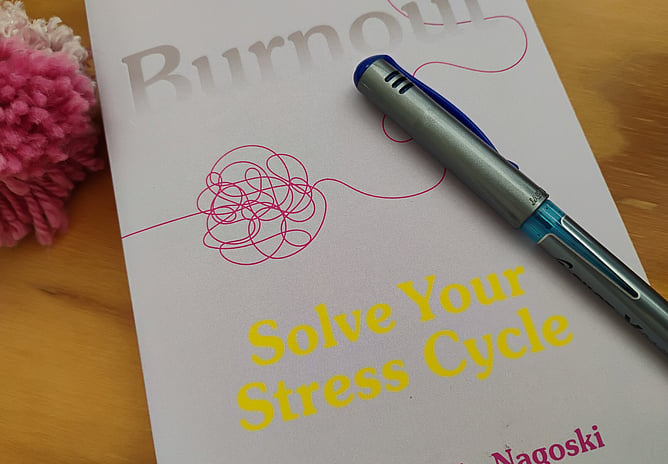
Burnout has had a lot of air-time over the last couple of years. Whether that's in the press, on social media, in TED Talks. You may even know someone who's been through burnout, or been through it yourself.
But much of what's out there about burnout treats it as an experience that's the same for everyone, with the same causes, and solutions that work the same for everyone. That's not accurate. As one immediate example, work by prominent burnout researchers Maslach and Leiter suggests that burnout is higher amongst workers in the 'caring professions' than those in other sectors. And for people in the public sector, and women in particular, that assumption of universality of experience matters.
What burnout actually is (even the experts disagree)
Burnout has now been researched for decades, and there is widespread agreement that it arises out of insufficiently managed chronic stress, particularly in the workplace. For reference, the World Health Organization (WHO) provides a burnout definition that corresponds with that of Maslach, as an occupational (but not medical) condition featuring three dimensions: feelings of energy depletion or exhaustion, increased mental distance from one’s job, or feelings of negativism or cynicism related to one's job, and reduced professional efficacy.
But despite all the research so far, and the WHO standpoint, there is ongoing academic disagreement about precisely how to define burnout, as distinct from other similar and even overlapping conditions, such as depression.
Furthermore, there isn't consensus on how to properly measure and diagnose it. There are several different tools used globally but none enables a complete diagnosis. For example, Maslach's Burnout Inventory, which surfaces whether a person is experiencing any of the components of burnout, versus the more recent Burnout Assessment Tool of European researcher Wilmar Schaufeli and his team, which determines whether a person is at risk of burnout.
This leaves us in somewhat of an interesting situation. There is plenty of discourse on burnout and how many people it is affecting globally, and yet we actually can't clinically diagnose burnout. That is, we don't have a way to say, for sure, you have (or don’t have) burnout. So when we read about burnout, it's good to keep in mind that the word 'burnout' may just be being used because it's familiar, or to simply mean 'exhaustion at work'.
Burnout in the public sector and burnout for women
Although the public sector is not thought of as a 'caring profession', research into burnout risk by Aotearoa New Zealand researcher Jarrod Haar (AUT, 2024) found that 48% of public sector workers are at risk of burnout. The reason may be their 'public sector motivation', with the 2025 Public Service Census revealing 96% of public service employees felt it was important that their work was for the common good. (Sounds like caring to me…) Professor Haar also found in 2024 that job insecurity is a key burnout driver, and the public sector has not been known for its job security in the last 2-3 years.
While Haar found the risk of burnout didn't differ from gender to gender, I would argue that this is a particularly relevant issue and risk for women in the public sector.
The Public Service Census found that 44% of respondents often or always experienced work stress in their roles, and with Stats NZ's Household Labour Force Survey recording that women make up 62% of the public sector, that suggests a potentially high number of women in the public sector experiencing chronic stress. This seems likely, given that following the 2021 Public Service Census, a deep-dive into the Census data for women found that stress was raised as an issue by both front-line and back-office staff in thousands of responses to an open-ended question.
Public sector work: potential for meaningful impact, but moral injury too
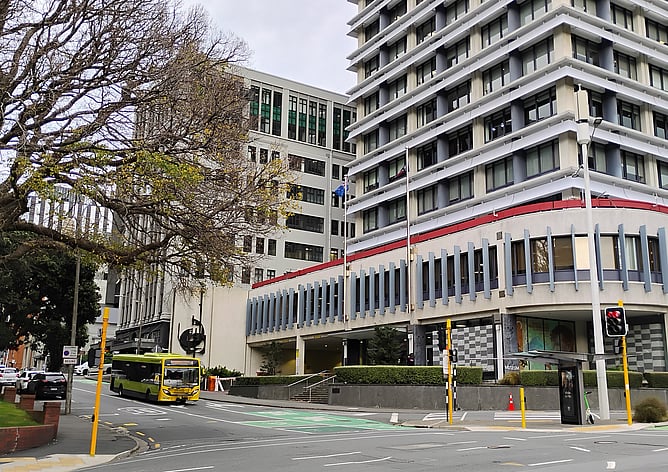
There's a sort of paradox in public sector work. You might even call it a trap for those unaware. On the one hand, working in the public sector brings the possibility of your work contributing to the common good, benefitting your local community, helping those who need a little extra support because through no fault of their own, life, and society's systems, haven't treated them well. And this possibility is what attracts so many people - so many women - to the public sector, because of their public service motivation.
On the other hand, because the public service (and to differing extents, the public sector more broadly) must work to support the Government of the day, you can find yourself working on projects you don't agree with. Worse, you can be restricted or completely barred from doing what you believe, or even what many people believe, is the 'right' thing to do. And that leads to a set of uncomfortable emotions that taken together are called 'moral injury'.
Put simply, moral injury is the distress you experience from not being able to do what's right. In the private sector, it could be when you watch your company's business activities cause environmental damage but don't see this mattering to anyone. In the public sector, it could be having to produce policy which will have clear harms for already marginalized groups in society.
Understandably, this may cause you to feel ethically uneasy, and affected emotionally and psychologically. Over time, this is a type of stress that can compound, and the emotional and psychological effort of coping with the cognitive dissonance can wear you down. And that's when burnout becomes a risk.
While organisations in New Zealand are required to protect their employee's psychological as well as physical safety, in reality, many leaders and organisations only go as far as offering employee assistance programmes, for example, or resilience training. It's too little, too late.
Individual resilience won't prevent burnout on its own
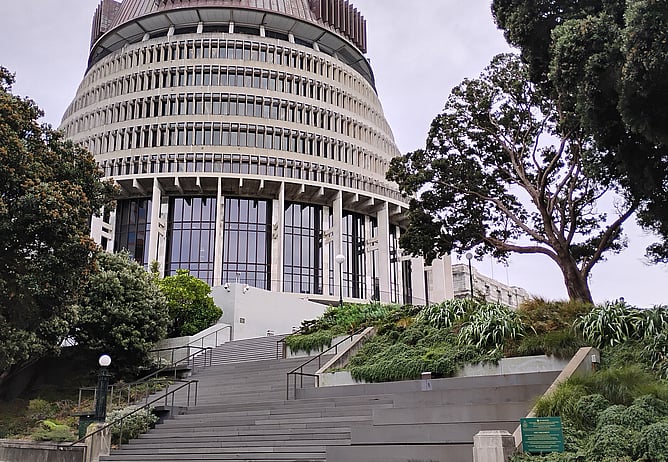
Public sector cost-cutting, using restructuring to effect an increase in outputs, and the resulting organisational dysfunction, join together with political decision-making and sometimes relentless media scrutiny, to create the context for chronic stress in the public sector.
What I'm saying is, stress and burnout are the products of a system, it's not because you aren't 'resilient' enough - which is the impression you'll leave resilience training with. I certainly did at my old organisation.
Being told, or telling ourselves, that the reason we are exhausted from work or getting burnout is because we lack resilience locks us into a self-improvement loop, which is neither fair on ourselves, nor will ever solve those structural issues that caused the problem in the first place.
But where does that leave us?
While there are practical things we can all do as individuals to protect or release ourselves from workplace stress, one of the best things we can do is to ensure we are parking the blame for burnout with the system we are part of, not with ourselves. That is, it's not a new coping strategy you need, it's more reframing burnout more accurately, to take in all of those structural factors that are unfortunately part of public sector work.
When I work with women in the public sector, that reframe is usually the beginning of everything else. Not a coping strategy. Not resilience training. Just seeing the situation clearly, for what it actually is — and then deciding, from that clearer place, what you want to do next.
________________________
I help professional women in the public sector make more progress in their work, reduce their stress and avoid burnout, and feel more satisfied at the end of the day. I write a weekly-ish blog, to share the action-enabling gems from the research evidence I come across in my reading. I offer both topic-focused and personalised coaching, and I've just launched a new 1:1 online coaching workshop focusing on tackling your work overwhelm. Email me at marie-louise@fireflycoaching.nz, I'd love to hear from you.