Whether we like it or not, work keeps changing. Whether it's the tasks we have to complete in our role, or the different aspects of our work environment. Or it might even be us that's changed - maybe we had a child or got them off to school, or we decided to study again to enter a new profession, or our work now has to fit with caring for a mum or dad who's not doing so great.
And as long as work, our work environment and we keep changing, we have to keep adjusting and reinventing ourselves, and that involves learning. Learning new subject matter, learning new tech, learning how to manage our energy, learning how to support others, learning when to hold our tongue and when to speak up, learning what we want out of work and what we're fed up with.
Do you consciously put time into learning? Or does the learning just come by happenstance? How do you learn best?
My favourite ways of learning new things
For me, I love to learn 'sitting down with someone' - someone knowledgeable in their area, who is generous in sharing their knowledge and experiences, and unfazed by the multitudinous questions I manage to think up. I've had a number of informal coaches and mentors over the years, and in most cases, they probably didn't know they were filling that role. Good coaching and mentoring bring not only knowledge and new ways of looking at your challenges, but also a supply of warm encouragement and enthusiasm to draw on.
But I also love learning by 'sitting down with a good book', and these days we are blessed with an ever-growing supply of amazing books by psychologists, neuroscientists and other researchers, that can help us learn about work. Not just how to do the work, but our relationship with work.
As someone who loves working hard and achieving at a high level, but also loves being a mum, a partner, a cricket team manager, a gardener and so on, I love that there are also an increasing number of books that help us tighten the reins on work. They help us re-calibrate our work so we can achieve what we want and need to without compromising our health, and those responsibilities and important relationships outside work.
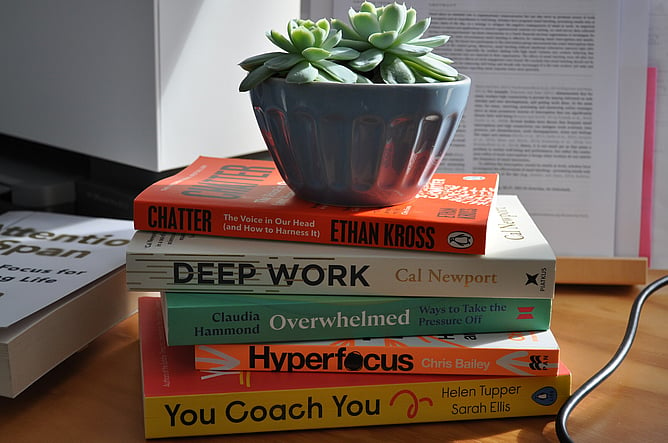
The books I've been reading and learning from this year
This past year, I've read a lot. Business books, coaching books, psychology books, organisational psychology books, neuroscience books, economics books… (This reminds me of when Forrest Gump's friend Bubba lists all the ways to cook shrimp. Great movie…)
Being quite an action-oriented person, the ones I’ve liked the most are those with links to the academic research about what really works. I love me a good meta-analysis. Then you've got a way to know whether this or that idea is likely to work for you in your job, in your workplace.
But I think there's definitely a place for personal experience or anecdotal evidence too - it can give us new perspectives and ideas to try out. And if the author is someone we relate to because their situation is or has been somewhat similar to our own, then there is a chance that what they're suggesting as a fix for this or that other challenge might just be helpful for us as well.
…and the five most helpful for overcoming work challenges
So, without further preamble, this week's blog post introduces the five most helpful books for managing work challenges that I've read this past year.
You Coach You, by Helen Tupper and Sarah Ellis
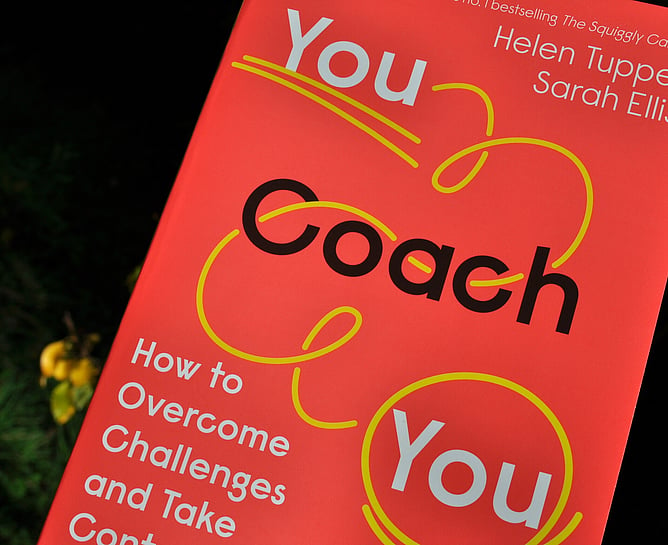
Good for: when you're in a work 'dip', you've hit a work 'wall', or you're at some kind of work 'crossroads'.
I think Helen Tupper and Sarah Ellis saved me last year. I had taken voluntary redundancy from my last role in the public sector, and had been looking for a new role for months, but none of the advertised jobs appeared to fit the bill. I realised that if I went ahead and applied for them anyway, I would be 'squeezing myself into the spaces available' rather than doing what I'm really good at. But, was I 100% clear on what that was precisely? (Not 100%, no...)
You Coach You, like the loveliest sort of career-focused boot camp in book form you can imagine, taught me how to coach myself for resilience, self-belief, work relationships and purpose at work - among other things. I liked how each chapter surfaced all the limiting thoughts in my head that were holding me back, giving me new ways to see things, and (as a fan of getting things done and solved and completed) I loved each chapter's 'coaching tools' and 'ideas for action'.
I am now much better at valuing what I've achieved in the past as a way to strengthen my self-confidence when trying new things in the present, and - armed with a blueprint - I've invested time and effort in strengthening my work and other relationships. As a result, I've now established a new business and feel more supported - and energised - by the network of people I have connections with.
Deep Work, by Cal Newport
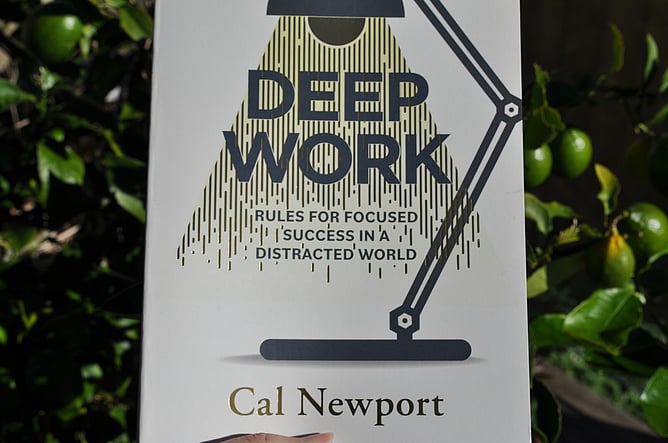
Good for: when your attention at work is fragmented, and you're not making progress on the big, important, cognitively-demanding (but most rewarding) pieces of work you'd most like to complete.
In Deep Work, Cal Newport argues that the ability to focus, to concentrate, to use our cognitive abilities to their limits, is the skill that has become, on the one hand, rare in our contemporary workplaces, but on the other hand, crucial to thriving and achieving at a high level - and to doing work that makes a real impact. Because, if you let it, technology will steal you away to get lost in emails, chats, social media, and other apps, leaving you having achieved very little of real value at the end of the day.
While admittedly 'deep work' lends itself most to knowledge work, the strategies Newport proposes in the book represent a significant shift in how you go about your work - with a significant improvement in your productivity. The second half of the book is where the rubber really hits the road, and covers how to: schedule your work week/month/year to enable deep work, radically reduce the amount of time you spend on 'shallow work' (the 'rats and mice' that can be so draining), and be highly deliberate about taking and optimising breaks and downtime.
With Deep Work as my springboard, I have rearranged my schedule so I do at least an hour and a half of 'research and development' activity in the morning, limit my LinkedIn time to two hours across the week, and deliberately spend my afternoons on tasks that are lighter on my brain and involve more creative and divergent thinking. I love that I can rely on making progress on my research 'projects' each week but also have the afternoon to look forward to each day, which is a bit more social and feels fun in a different way.
Hyperfocus, by Chris Bailey
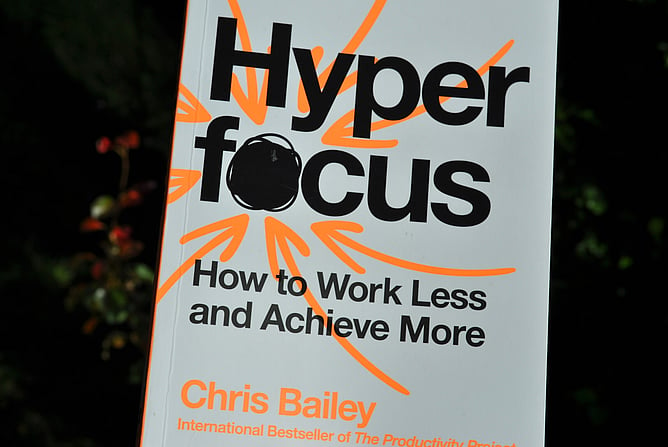
Good for: when you know you're getting distracted a lot, but don't know how to tackle it.
Hyperfocus has an obvious overlap with Deep Work above, but goes down into the weeds of attention even more. Our 'attentional space', the tasks and distractions we fill it with, how well it works but also its limits, how to best use it depending on the task in front of us, and how to recharge it.
The book provided some fascinating new understandings about attention and focus. For example, did you know that research has found we only focus for an average of 40 seconds before we are interrupted or interrupt ourselves? Gobsmacking (though also believable). And Bailey also provides interesting analyses of the different types of tasks we do at work, and the different kinds of interruptions and distractions we encounter. He takes us through a distractions audit process, with suggested ways to combat various distraction types, and helpful instructions on how to 'hyperfocus' when we want one task to consume all our available attention. The second part of the book looks at 'scatterfocus' - for when we need to be in the right attention mode to work on more creative or reflective tasks.
With my new understanding of the limitations of my attention, and exactly what my unique set of daily distractions is, I take optimising my work environment for deep work much more seriously than before. I'm back into wearing my noise-cancelling headphones, using my Do Not Disturb phone setting, and am no longer irritated by 'low battery' notifications because I plug my laptop in when I sit down. I am sure I have never worked in such a focused way before, and I think I enter 'flow' much more often now during my morning deep work time. (If you're new to it, I discussed flow in my recent blog post on job satisfaction.)
Overwhelmed, by Claudia Hammond
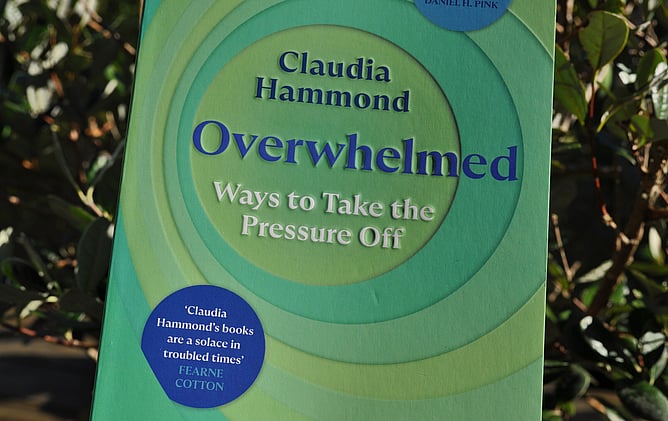
Good for: when you're feeling overwhelmed, at work or at home, and need to feel better.
Claudia Hammond writes in her introduction to Overwhelmed that her idea with the book is to help us find ways to take the pressure off before it all becomes too much, and it definitely does that. I picked up the book, not just because of my professional interest in helping people deal with the overwhelm that emerges at work. But because - as a new business owner - I was starting to feel overwhelmed myself.
The book's divided into three soothing parts. In first few chapters, Hammond suggests that we ask ourselves questions to check the assumptions we might be making in our lives - for example, that stress is always bad, and whether everyone else really does know what they're doing. Then come some very practically-oriented chapters replete with evidence-based tips and tricks to try, around procrastination, for example, and perfectionism. And lastly, the final chapters focus on addressing the overwhelming and ever-present worry or worries many of us feel, and help us to zoom out and get a bigger perspective - "It's not all about you (and that's a good thing)".
I am still dipping in and out of the book and gradually trying and integrating a number of small changes, but the shift that I tried first is still having an impact: reframing my To Do list, and being more discerning about which tasks really need doing and which ones can be left. As for many things, the internet is both friend and foe when starting a small business - a bottomless chocolate fountain of helpful information, but one that can drown you at the same time. I am now more deliberate about what 'business priorities' I put on my daily schedule and more realistic around what I'm expecting myself to pull off, which makes me feel like I am making more sophisticated use of my available work time.
Chatter, by Ethan Kross
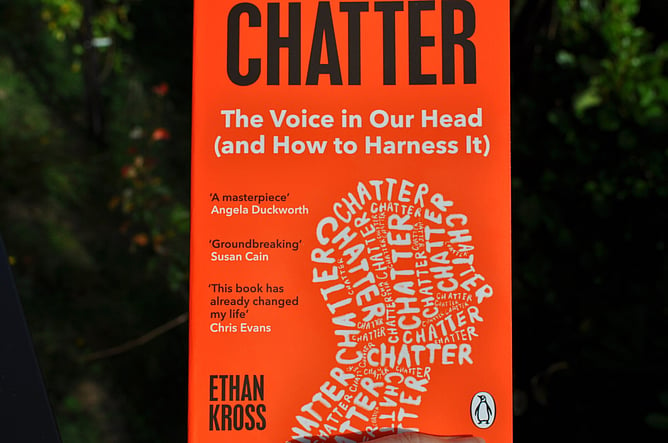
Good for: when you find yourself avoiding stepping up at work or elsewhere, because the voice in your head says you're not good enough.
If you read my recent blog post on self-confidence, you'll know about Ethan Kross and Chatter already. It's a fantastic book, in which Kross hands over his understandings (gained through years of academic research) of the human inner voice - and its less benign version, negative 'chatter' - so we can take practical actions to reduce the effect of this negative inner monologue on how we perform in all the different parts of our lives.
And it really is important to tackle it. Because as well as undermining our performance at work (not speaking up in meetings, not taking up that new opportunity to be in charge…), it can lead us to other regrettable outcomes. It can affect our decision-making, it can lead us to push away important people and damage our relationships with them, and it can cause us to lose professional or other skills we've spent years developing.
I have such a bent towards helping resolve others' (and my own) negative emotions, particularly related to work, that after reading the first two chapters of the book and getting a better grip on what chatter is, I flipped straight to the evidence-based Tools section. There are twenty-six to try out and I'm only part-way through, so my chatter still often gets the better of me - but I'm working on it. This week, I've been trying to 'broaden my perspective' and think more critically about what my chatter's telling me, and I think I've turned the chatter tide. (For this week, at least.)
So where can I get them?
We’ve made it. Five books that I think are worth an hour or three, on the sofa with a blanket, a cup of tea, and a cat, if you have one. And because I am a big supporter of public libraries, just a tip that you can probably find most of them at your local city or town library for free - as e-books, or as real, physical, smell-the-ink books. Or take a look at your local independent book store.
Maybe just pick one to start with (to avoid getting overwhelmed), and see if you can make a plan to implement three new ideas to improve your experience at work. Happy learning!
I help professionals make more progress in their work, reduce their work stress and avoid burnout, and feel more satisfied at the end of the day. I include 2-3 helpful research evidence gems in every blog post that you can try out for yourself at work. I've just launched a new 1:1 online coaching workshop focusing on tackling your work overwhelm, and offer completely personalised coaching too. Do get in touch, I'd love to hear from you.